Advertorial

Trending in the US
Advertorial
Trending in the US

UPDATE: Lymphflow Prostate Support is SELLING OUT faster than expected! Lock in your order NOW to get 40% OFF + FAST SHIPPING

UPDATE: Apollis Lymphflow Prostate is SELLING OUT faster than expected! Lock in your order NOW to get 40% OFF + FAST SHIPPING
Retired Urologist Exposes the "Wait and Retest" Trap Keeping 33 Million American Men Prisoner to a Rising PSA Number
Former urologist and pelvic inflammation researcher reveals the medical establishment's "Monitor and Medicate Playbook" — and the overlooked internal drainage discovery that helped thousands of men walk into their next PSA retest feeling calm, proactive, and finally in control (without Finasteride, without biopsies, and without destroying everything that makes you a man)

3,791 Ratings
By Dr. Marcus Webb MD
I'm about to make a lot of powerful people very uncomfortable.
Urologists. Pharmaceutical companies. The entire $4.2 billion prostate supplement industry.
Because what I'm about to share could cost them millions in lost revenue this year alone.
But I don't care anymore.
Not after watching my patient Robert — a 63-year-old retired contractor, grandfather of four, man who'd never missed a day of work in his life — sit across from me in my office and quietly ask:
"Doc, am I dying?"
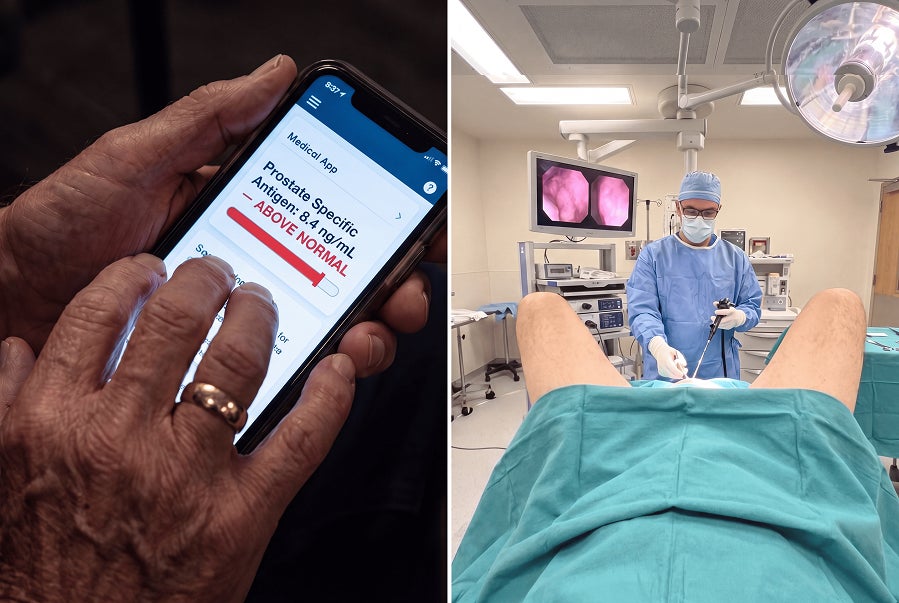
His PSA had jumped from 2.1 to 7.8 in fourteen months.
He didn't have symptoms. He felt fine. He'd just come in for a routine blood panel.
But that number had already consumed him.
He'd spent three weeks Googling at 2 AM. He'd mentally planned his funeral. He'd started pulling away from his wife because he didn't know how to tell her what was spiraling through his head every night.
He'd been to two urologists before me. Both told him the same thing:
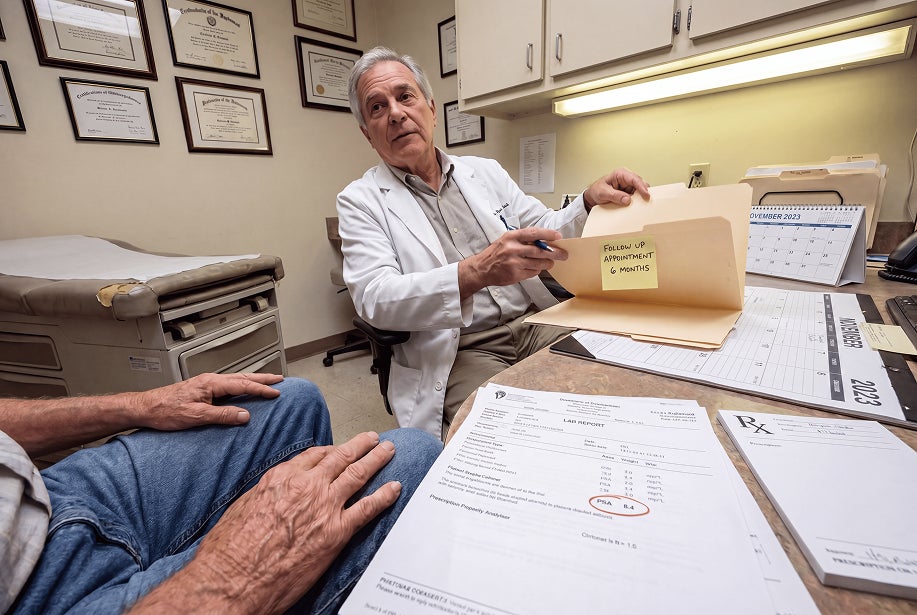
"Come back in six months and we'll retest."
That was it.
No explanation. No game plan. No answer to the only question that actually mattered to him.
Why is this happening, and what can I actually do about it?
I didn't have a good answer for him that day.
And that — after 24 years of practicing urology — is the thing that finally broke me.
THE NIGHT I WALKED AWAY FROM CONVENTIONAL UROLOGY

It was a Tuesday evening in November.
I was sitting in my office at 9 PM going through the week's charts.
Robert's file was open on my desk. PSA 7.8. Retest in six months. Monitoring recommended.
Fourteen other files with almost identical notes.
Fourteen men spending their nights terrified. Fourteen men Googling worst-case scenarios. Fourteen wives noticing their husbands were somewhere else, even when they were sitting right next to them at the dinner table.
And every single one of them had been handed the same prescription:
Wait.
I thought about what Robert had said on his way out:
"I've already accepted the fact. I just want to know — is there something we can do? What's the game plan?"
I didn't have one.
Twenty-four years of training. Board certified. Chief of Urology at a major hospital system.
And when a frightened grandfather asked me what he could actually do about a rising PSA, the honest answer was: nothing yet. Come back in six months.
Something inside me snapped.
I wasn't going to keep handing men a monitoring timeline and calling it medicine.
I was going to figure out what was actually happening inside the prostate — underneath the number, upstream of the inflammation — that nobody in conventional urology was talking about.
Or I was going to leave the field trying.
WHAT 22 MONTHS OF RESEARCH UNCOVERED

For the next 22 months, I became a man obsessed.
I pulled research from pelvic inflammation journals most urologists never read. I flew to conferences in Amsterdam, Toronto, and Seoul. I connected with lymphatic medicine specialists, integrative oncologists, and pelvic floor researchers who were working on something the mainstream urology world had almost entirely ignored.
And what I found made me want to throw 24 years of training in the trash.
The entire conventional approach to elevated PSA is built on a fundamental misunderstanding of what's actually causing the inflammation.
Not a small misunderstanding.
A catastrophic one.
One that keeps millions of men trapped in the most psychologically brutal waiting room of their lives — doing nothing, feeling helpless, watching their PSA creep upward retest after retest — while the actual upstream cause goes completely unaddressed.
Here's what they're not telling you:
A rising PSA is not your prostate's problem.
It's your prostate's distress signal.
The number isn't the disease. It's a warning light on the dashboard. And the medical system — bless its heart — has spent forty years staring at the warning light instead of opening the hood.
THE REAL REASON YOUR PSA KEEPS CLIMBING
(And Why "Wait and Retest" Fixes Absolutely Nothing)

Let me explain this the way I wish someone had explained it to Robert.
Your prostate does not exist in isolation.
It sits inside one of the most complex biological clearing networks in the male body — a dedicated lymphatic drainage system called the periprostatic lymphatic network.
Most men have never heard of it.
Most urologists never mention it
And that silence — that single, massive blind spot in conventional prostate care — may be the entire reason your PSA is elevated right now.
Here's how it works when it's functioning properly:
Your prostate, like every organ, generates cellular waste. Metabolic byproducts. Inflammatory debris. The constant low-level exhaust of normal biological activity. The periprostatic lymphatic network is the drainage system responsible for clearing all of that waste — flushing it away from the gland, transporting immune cells in and out, managing fluid balance in the surrounding pelvic tissue, and preventing the toxic backlog that drives chronic inflammation.
When the drainage works, the prostate environment stays clean. Inflammatory burden stays low. PSA stays calm.
Now here's what nobody is telling you about what happens when it doesn't work.
THE "PELVIC DRAIN BACKUP" — THE HIDDEN DRIVER BEHIND RISING PSA

Picture your prostate surrounded by a network of drainage channels — like the storm drain system running beneath a city street.
When the drains are clear, rainwater flows through. The streets stay clean. Everything functions normally.
Now picture those same drains slowly clogging.
Dead leaves. Sediment. Years of accumulated debris pressing against the grate.
When the rain comes — when the prostate generates its normal inflammatory byproducts — the water has nowhere to go.
It backs up. It pools. It sits there, stagnant, pressing against everything around it.
That stagnant water is the inflammatory waste your lymphatic network was supposed to clear.
The cytokines. The cellular debris. The metabolic exhaust of an overworked, under-drained prostate gland.
And here's what the research now confirms:
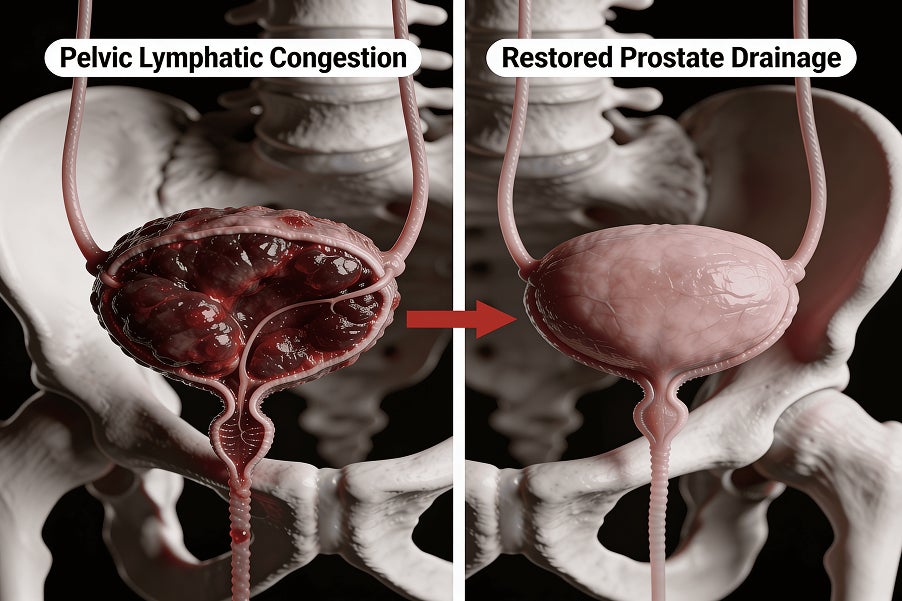
When pelvic lymphatic drainage is congested, that inflammatory waste doesn't disappear. It accumulates in the tissue surrounding the prostate — keeping the gland irritated, inflamed, and producing elevated PSA — even when there is no active infection, no cancer, and no structural disease.
Your PSA isn't rising because something new is going wrong.
It's rising because something old — something that's been building for years — is finally backing up past the point your body can quietly manage on its own.
The drain is clogged.
And your doctor is staring at the flood on the street without ever asking why the drain stopped working.
THREE REASONS YOUR LYMPHATIC DRAIN GETS CLOGGED (That Your Urologist Will Never Bring Up)
Reason #1: The Modern Sedentary Life Is Physically Compressing Your Drainage System

The periprostatic lymphatic network depends on movement to function.
Unlike your cardiovascular system — which has the heart to pump blood — your lymphatic system has no central pump. It moves through muscular contraction. Through walking. Through the natural compression and release of your pelvic floor as you move through the day.
For most of human history this worked perfectly.
A Spartan warrior at 60 was still moving through terrain every day.
A Native American elder at 65 was still hunting and gathering before sunrise. Their pelvic floors contracting and releasing constantly — naturally pumping their lymphatic systems without ever knowing what a lymphatic system was. Prostate inflammation at the rates we see today simply wasn't part of their reality.
Something changed.
It was the chair.
Here's what decades of desk work, long commutes, and retirement recliners have done to that system:
Prolonged sitting physically compresses the pelvic lymphatic structures. It restricts the muscular contractions that keep lymph moving. It creates chronic pelvic floor tension that slowly, quietly, chokes the drainage network surrounding your prostate.
Research now confirms that sedentary time is directly associated with increased inflammatory burden in the pelvic region in men over 50.
You're not sick because of bad genetics.
You're not sick because of bad luck.
You're living a modern lifestyle that has been physically strangling the drainage system around your prostate for twenty years — and nobody told you.
Reason #2: Environmental Chemicals Are Attacking the Prostate Directly

A 2025 review in Nature Reviews Urology analyzed nearly 500 studies on environmental endocrine-disrupting chemicals — BPA from plastic water bottles, polyester or nylon underwear, phthalates from food packaging, PFAS from non-stick cookware, parabens from personal care products.
The findings were damning.
These chemicals accumulate in prostate tissue. They disrupt hormonal signaling. They promote chronic prostate inflammation at the cellular level. And they've been building up in your body for decades — with every plastic container you've microwaved, every non-stick pan you've cooked on, every polyester brief or boxer you wore for they day, every receipt you've handled at a gas station.
Prostate inflammation rates weren't always this high.
Something changed.
And the chemical environment surrounding your prostate right now is a scientifically legitimate part of that story — one your urologist almost certainly won't bring up during a seven-minute appointment.
Reason #3: The Inflammatory Backlog Perpetuates Itself
Here's the part that no one explains — and the part that makes the "wait and retest" approach not just frustrating, but genuinely dangerous to your psychological health.
Once the periprostatic lymphatic network becomes congested, the inflammatory waste it can't clear doesn't just sit there passively. It sustains the inflammation that created it. The cytokines and cellular debris that should have been flushed away instead recirculate through the pelvic tissue — triggering more immune response, generating more waste, creating more congestion.
It's a self-reinforcing cycle.
And the longer it runs, the harder it becomes to interrupt.
Six months of "watchful waiting" is not a neutral act.
It's six months of the cycle running unchecked.
That's what Robert was doing. That's what fourteen men in my patient files were doing.
Waiting — as if time alone would clear a drain that nobody was addressing.
WHY EVERYTHING YOU'VE TRIED HAS MISSED THE POINT
You already know the standard options.
You've probably already tried some of them.
Let me tell you why they haven't worked — and why they were never designed to address the actual upstream problem.
"Wait and Retest"
The most common recommendation in urology. Also the most psychologically brutal.
It treats the PSA number as the problem. It does nothing for the inflammatory environment producing that number. And it leaves you in a 4-6 week liminal state — not diagnosed, not cleared — that men consistently describe as the worst psychological experience of their adult lives.
"The uncertainty while waiting for results can be the toughest part."
"When you don't get the answers that you want, it creates that mental disparity in the mind. You know... and you worry."
"No, I don't think it really goes away."
Watchful waiting isn't medicine. It's abandonment dressed in clinical language.
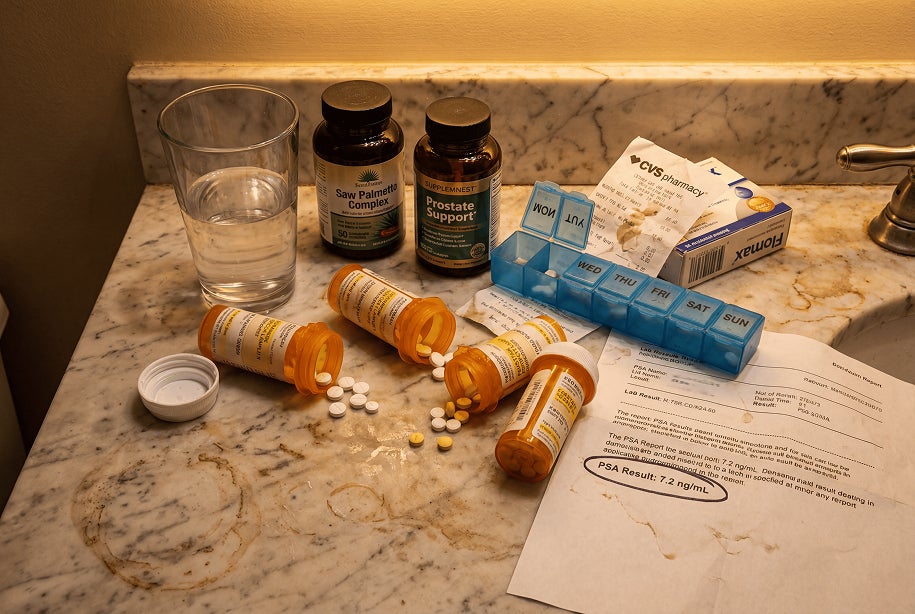
Saw Palmetto and Standard Prostate Supplements
The most studied natural prostate intervention in history also has the most embarrassing track record.
A 2012 Cochrane review of 5,600 men confirmed what millions had already suspected: saw palmetto performed no better than placebo for prostate health outcomes. A 2011 double-blind study backed it up. Twenty years and billions of dollars — gone.
Why does it fail?
Because saw palmetto targets DHT. Pygeum targets prostaglandins. Beta-sitosterol targets cellular inflammation. They're all working downstream — fighting symptoms at the level of the gland itself.
None of them — not a single standard prostate supplement on the market — addresses the upstream lymphatic clearance problem.
It's like trying to mop up a flooded floor without ever turning off the faucet.
The floor stays wet. The PSA stays elevated. And another bottle goes under the bathroom sink.
"I tried saw palmetto and pygeum and neither did a thing."
"It's all honestly a crapshoot."
"I've probably spent $400 on different prostate supplements over the past two years. Most did nothing."
Finasteride, Flomax and Pharmaceutical Options
This is where men get a real choice presented to them.
Lower the PSA number — at a cost.
The cost is documented in thousands of forum posts, clinical studies, and men's own words, and it reads like a list of everything this demographic fears most:
"This drug destroyed my life."
"It literally killed my self-confidence. It has killed my urge. IT DESTROYED ME."
"Totally crashed my sex drive. My libido was down to 0. I was useless in bed."
"After a year — insomnia, depression... libido, erection, and any sex activity... gone."
Post-Finasteride Syndrome is real. It's documented. And the men who experience it describe it not as a side effect — but as the theft of their identity.
Your urologist knows about these outcomes.
He may not have mentioned them in the detail they deserve.
And here's what makes it worse: even Finasteride doesn't address the lymphatic drainage problem. It lowers PSA by suppressing DHT — manipulating the hormonal environment of the gland. The inflammatory backlog in the surrounding pelvic tissue? Still there. Still accumulating. Still driving the process that will start the number climbing again the moment you stop.
This is the "Monitor and Medicate Playbook":
Wait and retest → Suggest saw palmetto → Prescribe Flomax or Finasteride when the number keeps climbing → Monitor for side effects → Refer for biopsy → Repeat until the man either accepts the situation or undergoes a procedure that carries its own devastating risks.
It's a system designed to manage the number.
Not to address the cause.
And it has been running, unchallenged, for decades.
WHAT FINALLY CHANGES WHEN YOU ADDRESS THE DRAIN

This is what the research confirmed — and what sent me in an entirely different direction from conventional treatment.
Men who felt informed and had a plan experienced dramatically reduced anxiety before their PSA even changed.
Read that again.
Not after the number dropped. Before.
The psychological devastation of a rising PSA isn't just about cancer fear — though that's part of it. It's about the complete loss of agency. The feeling of being a passive patient in a system that has no satisfying explanation and no proactive path.
When you give a man a coherent mechanism — here is what is actually happening inside your body, here is why, here is what we can do about it — something shifts. The catastrophizing slows. The 2 AM Google spirals quiet down. He starts making plans again instead of preparing for the worst.
The PSA number is a gate.
On the wrong side of that gate: obsessive monitoring, mental absence from family, inability to be present at dinner, quietly planning for outcomes no one is saying out loud.
On the right side: ordinary life. Breakfast with his wife. Sleeping through the night. Planning next summer's fishing trip without the mental asterisk that says if I'm still here.
The key to moving through that gate isn't just a lower number.
It's understanding what's actually happening — and having something real to do about it.
That's what I went looking for.
And what I found is something the conventional urology world has almost entirely overlooked.
THE DISCOVERY THAT CHANGES EVERYTHING

I want to tell you about the moment everything clicked.
It was 11:43 PM on a Wednesday.
I was three months into my research. Sitting at my kitchen table surrounded by lymphatic medicine journals, pelvic inflammation studies, and cold coffee.
My wife had gone to bed hours ago. She'd stopped asking when I was coming up.
I was reading a 2019 paper out of the University of Amsterdam on periprostatic lymphatic congestion and chronic nonbacterial prostatitis — a condition that affects millions of men with elevated PSA and zero bacterial infection. The kind of condition that sends urologists shrugging and reaching for the prescription pad because they have no other tool.
The paper confirmed what I'd been piecing together for months.
Men with chronic prostate inflammation and persistently elevated PSA — men who had no infection, no structural abnormality, no satisfying explanation — consistently showed signs of impaired pelvic lymphatic drainage.
Not sometimes. Consistently.
The lymphatic network surrounding their prostate wasn't clearing the inflammatory waste efficiently. The cytokines and cellular debris that should have been flushed away were accumulating in the pelvic tissue — keeping the gland in a constant state of low-grade irritation, keeping immune response activated, keeping PSA elevated.
And not a single one of these men had ever been told.
Not by their urologist. Not by their primary care physician. Not by the specialists they'd paid hundreds of dollars per appointment to see.
Because supporting pelvic lymphatic drainage isn't in the urology playbook.
It's not a drug. It can't be patented. It doesn't generate the kind of recurring clinical revenue that Finasteride monitoring appointments and six-month retest cycles generate.
It's just... the answer.
And the system had no financial incentive to find it.
I closed the journal.
Sat there in the dark for a long time.
Then I picked up the phone and called a colleague — a botanist and formulation specialist I'd worked with fifteen years earlier on an anti-inflammatory research project.
"I need to build something," I told him.
"What kind of something?"
"Something that actually addresses what's happening around the prostate. Not inside it. Around it. The drainage. The backlog. The part nobody's touching."
There was a long pause.
"I've been waiting for someone in urology to call me about this for twenty years," he said.
FOURTEEN MONTHS. SEVEN FORMULATIONS. ONE BREAKTHROUGH.

What followed was the most intensive research process of my professional life.
We weren't trying to build another prostate supplement.
The market is drowning in those.
What we were building was something categorically different — a formula specifically designed to support the periprostatic lymphatic network. To help the body clear the inflammatory backlog that accumulates when pelvic drainage becomes sluggish. To address the upstream problem that every saw palmetto blend, every pygeum capsule, every beta-sitosterol formula completely misses.
Seven formulations. Fourteen months. Dozens of revisions.
We threw out anything that was redundant with existing prostate supplements. If it targeted DHT, we didn't need it — that problem was already being addressed by a dozen products on the market. If it was just another antioxidant blend, we passed — oxidative stress support wasn't the gap we were filling.
We needed specific, evidence-backed ingredients that supported lymphatic flow, reduced inflammatory burden at the drainage level, restored pelvic microcirculation, and helped the body clear the toxic backlog that was keeping PSA elevated and the prostate environment hostile.
What we landed on was something I'd never seen assembled in a single formula before.
And when I gave the first completed batch to Robert —
The same Robert who'd sat across from me asking if he was dying —
His PSA went from 7.8 to 4.3 in eleven weeks.
His doctor — not me, his new primary care physician who didn't know what he was taking —
looked at the retest results and said four words:
"Whatever you're doing, keep doing it."
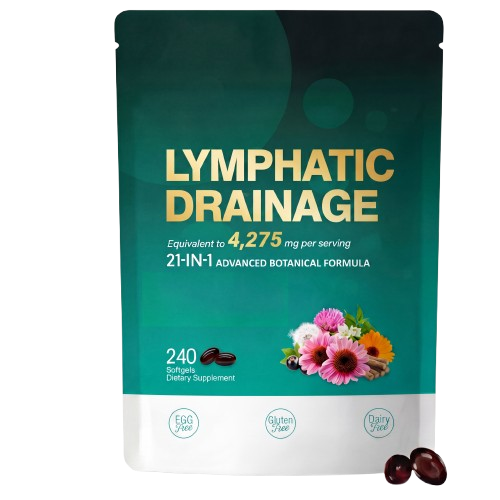
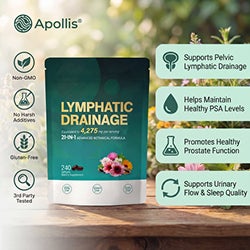
INTRODUCING APOLLIS LYMPHFLOW PROSTATE SUPPORT
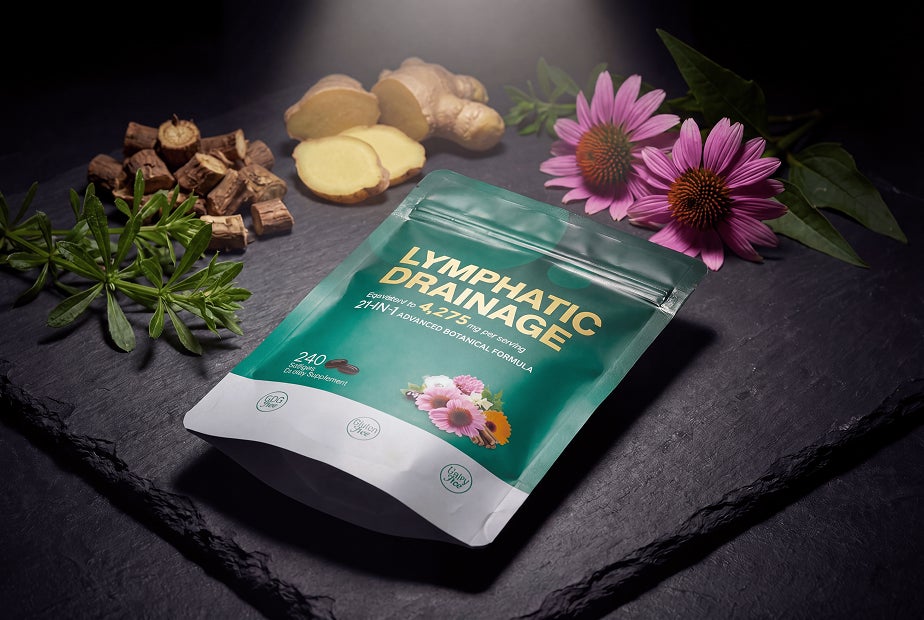

The first prostate support formula built around the neglected drainage side of PSA elevation — not the gland itself.
This isn't another saw palmetto formula with a new label.
It's not a DHT blocker in disguise.
It's not a generic "prostate health" blend pulled from the same tired ingredient list every other supplement on Amazon is running.
Apollis LymphFlow Prostate Support was formulated from the ground up to address one specific, overlooked problem:
The inflammatory backlog that accumulates when pelvic lymphatic drainage becomes congested — and the cascade of PSA elevation, prostate irritation, and psychological devastation that follows.
Here's what's inside and why each ingredient was chosen:
QUERCETIN — The Drainage Unblocker
Quercetin is one of the most extensively studied flavonoids in anti-inflammatory research. A 2019 meta-analysis confirmed it significantly reduces C-reactive protein — one of the body's primary inflammatory markers — particularly in men with chronic inflammatory conditions.
But here's what makes Quercetin specifically relevant to the lymphatic angle:
Quercetin regulates the signaling markers that interfere with normal lymphatic vessel function when chronically elevated. When pelvic inflammation is ongoing, these signals essentially tell the lymphatic vessels to constrict — reducing drainage capacity at exactly the moment maximum drainage is needed.
Quercetin helps restore that signaling.
Think of it as clearing the narrowing in the pipe before you try to push more water through it.
BURDOCK ROOT — The Deep Tissue Cleanser

Burdock Root has been used as a lymphatic support herb in European, North American, and Ayurvedic medicine for centuries — not because ancient practitioners were confused, but because they were observing real outcomes in real patients long before we had the biochemistry to explain them.
Modern analysis has identified the active compounds responsible: arctiin, chlorogenic acid, and a complex of polyphenols that support antioxidant defense and promote metabolic waste clearance from congested tissue.
In the context of pelvic lymphatic support, Burdock Root is the deep cleaner — reaching into the tissue environment surrounding the prostate and helping the body begin moving the accumulated debris that's been sitting there, driving inflammation, for months or years.
CLEAVERS (Galium aparine) — The Lymphatic Activator

Cleavers has one of the most consistent traditional reputations of any herb in the lymphatic medicine literature. Documented in historic European, North American, and Ayurvedic texts specifically as a lymphatic tonic — used traditionally to stimulate lymph flow, reduce swollen glands, and restore drainage in congested tissue.
The biochemistry behind it is now coming into focus: iridoids, flavonoids, and coumarins with documented anti-inflammatory and mild diuretic properties that support the movement of fluid through congested lymphatic channels.
If Quercetin unblocks the pipe and Burdock begins clearing the debris, Cleavers gets the water moving again.
DANDELION EXTRACT — The Fluid Balance Regulator

Dandelion's potassium-rich profile supports fluid balance regulation and detoxification pathways throughout the body — but its specific relevance here is in the pelvic environment.
Fluid stagnation around the prostate contributes directly to the pressure, irritation, and inflammatory signaling that keeps PSA elevated. Dandelion Extract supports the body's natural mechanisms for managing that fluid balance — reducing the stagnation that compounds lymphatic congestion.
GINGER — The Inflammatory Burden Reducer

Ginger's active compounds — gingerols and shogaols — have been tested in randomized controlled trials and confirmed to reduce CRP and interleukin-1β, two of the key inflammatory cytokines that accumulate in congested pelvic tissue and sustain the inflammatory cycle.
Beyond its anti-inflammatory action, Ginger supports microvascular tone — improving circulation to the small blood vessels in the pelvic region that feed and support lymphatic function.
Less inflammation. Better circulation. A pelvic environment that's progressively less hostile to normal prostate function.
ECHINACEA PURPUREA — The Immune Pathway Modulator

The lymphatic system is also the primary highway of your immune response. When pelvic lymphatic drainage is compromised, immune function in the prostate environment is compromised with it — white blood cells can't move efficiently through congested channels, immune signaling becomes dysregulated, and the body's natural resolution mechanisms break down.
Echinacea Purpurea has been studied specifically for its ability to modulate immune response pathways — strengthening the immune defense systems that depend on functional lymphatic circulation to operate.
WHAT THIS FORMULA IS NOT
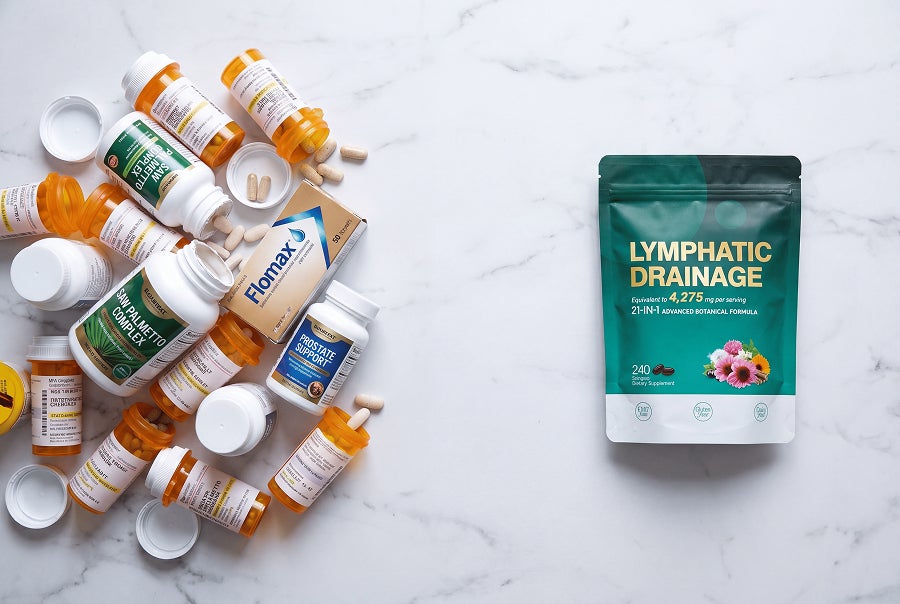
It is not a PSA-lowering drug.
It does not claim to treat, cure, or diagnose any disease.
What it does is address the upstream drainage environment that conventional prostate supplements — and conventional urology — have almost entirely ignored.
It supports your body's ability to clear the inflammatory backlog.
It helps restore the pelvic lymphatic flow that decades of sedentary modern life has progressively compromised.
It gives the prostate environment a fighting chance to calm down — not because anything is being suppressed or manipulated hormonally, but because the waste that's been accumulating around the gland finally has somewhere to go.
No sexual side effects. No hormonal interference. No liver enzyme monitoring.
Just the upstream support your prostate's drainage system has been waiting for.
THE MEN WHO CHANGED EVERYTHING
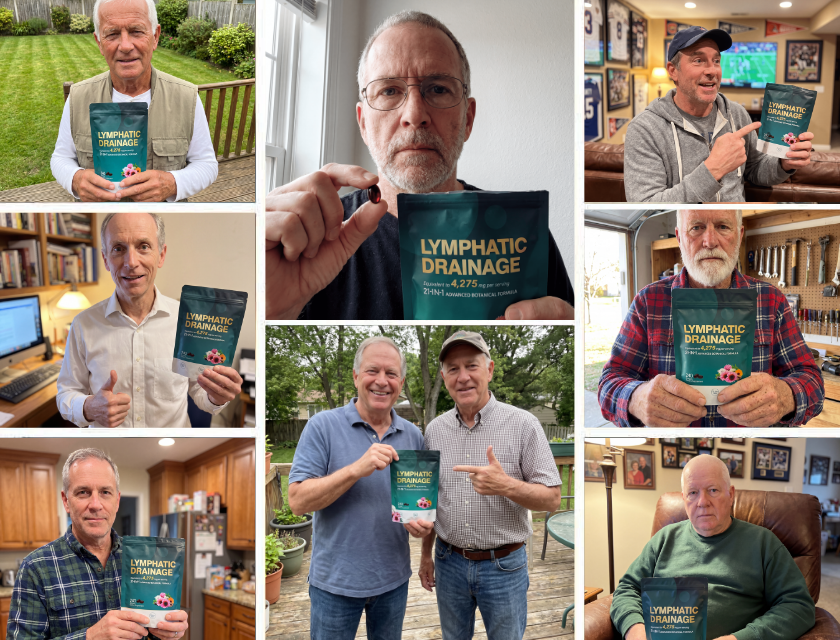
After Robert, I shared the formula quietly with a handful of other patients who were in the same position.
Men in the 4-6 week retest window. Men who'd been told to wait. Men who were Googling at 2 AM and pretending to be fine at dinner.
What happened over the following months I was not fully prepared for.
Gary T., 67, Arizona
Gary had watched his PSA climb from 3.1 to 9.4 over three years. Three urologists. Two courses of Finasteride he'd stopped because of what it was doing to him in the bedroom. A biopsy that came back inconclusive and left him feeling violated and no more certain than before.
When I explained the lymphatic drainage mechanism to him — the periprostatic network, the toxic backlog, why his PSA kept climbing despite doing "everything right" — he went quiet for a moment and then said:
"That's the first time in three years anyone has given me a reason. Not just a number."
Eleven weeks on Apollis LymphFlow Prostate Support. PSA moved from 9.4 to 6.1.
More importantly — and he said this himself — he slept through the night for the first time in over a year. He stopped checking his symptoms every morning like inventory. He went to his grandson's baseball game and watched the whole thing without his mind somewhere else.
His wife noticed before he did.
"She said I was back," he told me. "That's the only word she used. Back."
Dennis W., 61, Tennessee
Dennis came to me after his primary care physician had referred him to urology and the urologist had immediately recommended a biopsy based on a PSA of 11.2.
He refused the biopsy. Not out of denial — out of the very specific, very rational fear that 12 needles and a weeks-long recovery would give him an inconclusive result and leave him no more informed than he already was.
He wanted something he could do. A plan. Agency.
"I'm not the kind of man who sits in a waiting room while my body does whatever it wants," he told me. "Tell me what's actually happening and tell me what to fight with."
I explained the lymphatic drainage mechanism. I gave him the formula.
Ninety days later his PSA was 7.8.
His urologist — the same one who'd pushed for the biopsy — reviewed the results and said he wanted to hold off on any invasive procedures and continue monitoring.
Dennis called me after that appointment.
"Doc, for the first time since this started — I feel like I'm winning."
Frank M., 58, Ohio
Frank was the one that hit me hardest.
Fifty-eight years old. PSA spiked from 1.4 to 6.8 in a single year. No symptoms. No family history. Completely blindsided.
He described the weeks after getting the result as the worst of his life — worse than losing his business in 2008, worse than his divorce, worse than anything.
"I couldn't eat. Couldn't work. My wife thought I was overreacting. I couldn't tell her the stuff that was going through my head at night because it was too dark. I was already gone in my own mind."
He found me through a colleague referral. Started Apollis LymphFlow eight weeks before his scheduled retest.
PSA went from 6.8 to 4.1.
But that wasn't what he led with when he called me after the appointment.
What he said first was:
"I went from planning my funeral to planning my daughter's wedding."
Then he told me the number.
WHY YOUR UROLOGIST HAS NEVER MENTIONED THIS

This is the question I get asked more than any other.
If pelvic lymphatic drainage is a real, documented, anatomically legitimate factor in prostate inflammation — why has no urologist ever brought it up?
The answer is uncomfortable but simple.
Urologists are trained in urology. They are trained to evaluate the gland, interpret the number, prescribe the drug, perform the procedure. The periprostatic lymphatic network falls outside the standard curriculum of urology training in the United States.
It's not that your urologist is incompetent or dishonest.
It's that he's working from a map that doesn't include this territory.
He didn't tell you about pelvic lymphatic drainage support because nobody told him.
And the pharmaceutical industry — which funds the majority of continuing medical education for practicing urologists — has no financial incentive to teach it.
There's no patent on lymphatic drainage support.
There's no $400-per-month prescription to write.
There's no laser procedure to schedule.
There's no recurring monitoring appointment to bill.
This is information that exists in the research literature. It's anatomically documented. It's physiologically sound. And it lives outside the boundaries of conventional urology because the conventional system has no way to monetize it.
That's not a conspiracy.
That's just how medicine works when pharmaceutical revenue shapes medical education.
THE WINDOW YOU'RE IN RIGHT NOW

If you're reading this, you're probably in the most psychologically brutal stretch of your recent life.
You got a number. The number scared you. You went online and convinced yourself of things you can't un-convince yourself of. You've been trying to appear normal at dinner while your mind is somewhere entirely different.
You have a retest coming.
And between now and that retest, you have two options.
You can do what your urologist recommended — wait. Monitor. Try not to think about it. Watch the weeks crawl by while the inflammatory backlog that may be driving your PSA continues building, unaddressed, in the pelvic tissue surrounding your prostate.
Or you can do something.
Not something reckless. Not instead of medical care.
Something proactive. Evidence-based. Specifically designed for the upstream drainage problem that conventional medicine isn't addressing.
Something that gives you a plan — and with that plan, gives you back the thing that rising PSA steals faster than anything else:
The ability to be present.
At dinner. At your grandkid's game. In bed next to your wife. In your own life.
Men who felt informed and had a plan experienced dramatically reduced anxiety before their PSA even changed...and after about 45 days of daily lymphatic drainage their PSA scores did drop...significantly
That's not marketing language. That's clinical research.
WHAT APOLLIS LYMPHFLOW PROSTATE SUPPORT COSTS
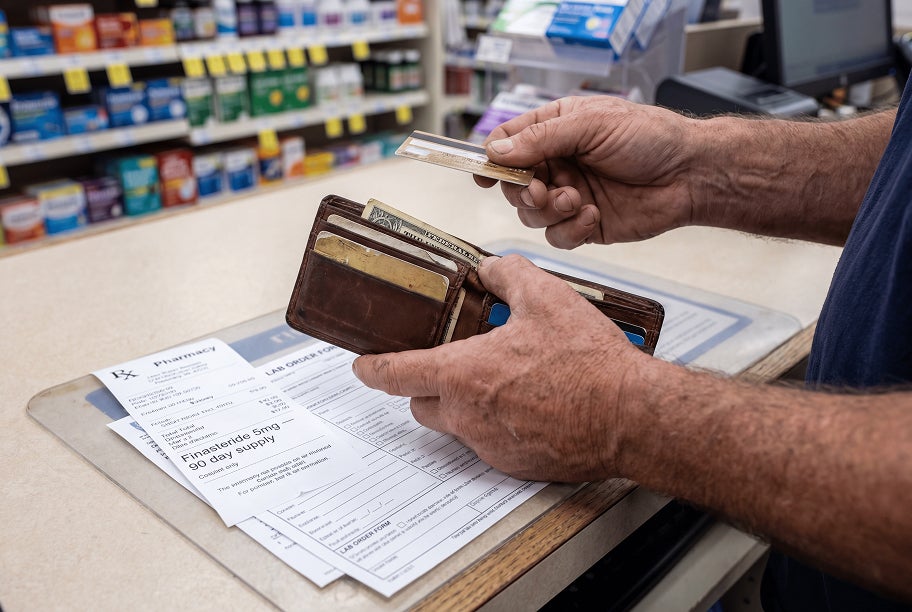
Let me show you what the conventional path actually costs — because most men don't add it up until they're deep in it.
The standard urology route for a man with elevated PSA runs like this:
Initial specialist consultation: $350–$500. Six-month retest with follow-up: $400. Finasteride prescription plus monitoring bloodwork: $800–$1,200 per year. Biopsy if the number keeps climbing: $3,000–$6,000. And if you've been down the supplement road already — saw palmetto, pygeum, pumpkin seed, whatever the internet told you to try — add another $300–$600 per year for products that never addressed the upstream problem.
You're looking at $5,000–$8,000 per year.
For the Monitor and Medicate Playbook.
The one that treats the number and ignores the drain.
Apollis LymphFlow Prostate Support costs less than $2 per day.
A 90-day supply — long enough to give the formula a legitimate chance to support your body's drainage clearance and begin shifting the pelvic inflammatory environment — is available today for a fraction of what a single urologist consultation costs.
No prescription. No monitoring appointments. No sexual side effects to manage. No liver enzyme panels to run.
Just the upstream support your prostate's drainage network has been waiting for — delivered in a clean, specifically dosed formula that doesn't overlap with the generic prostate supplement market because it was never designed to compete with it.
It was designed to address what that entire market misses.
MY PERSONAL 60-DAY GUARANTEE

I understand where you are right now.
You've probably already spent money on supplements that didn't work. You've been disappointed by solutions that promised more than they delivered. You're skeptical — and that skepticism is earned.
So here's what I'm prepared to do.
Try Apollis LymphFlow Prostate Support for 60 full days.
Take it every morning. Give your body time to begin clearing the backlog — this isn't a 72-hour fix, it's a drainage restoration process that builds over weeks.
Watch what happens to your sleep. Your ability to be present. The mental noise that's been running in the background since you got that call.
And if after 60 days you don't feel that something real has shifted — if you don't walk into your next retest feeling more prepared, more proactive, more like the man who takes action instead of the patient who just waits —
Send it back.
Every penny refunded. No forms. No interrogation. No "store credit" games.
Because I am not in the business of selling false hope to frightened men.
I am in the business of addressing a real, documented, upstream problem that the conventional system has ignored for decades.
And I am confident enough in that to put the entire risk on my side of the table.
THE DECISION IN FRONT OF YOU

Right now you're standing at the same fork in the road that Robert stood at.
That Gary stood at. That Dennis stood at. That Frank stood at.
Path One:
Keep waiting. Keep monitoring. Keep Googling at 2 AM and closing the laptop when your wife walks in. Keep going through the motions at dinner while your mind is somewhere else entirely. Keep handing your peace of mind to a number that your doctor has no proactive answer for.
Come back in six months. Get retested. Hope the number moved on its own.
And if it didn't — or if it went up — start the real conversation about biopsies and Finasteride and everything those words mean for who you are as a man.
Path Two:
Understand — for the first time — what is actually happening in the tissue surrounding your prostate. Address the upstream drainage problem that every standard prostate supplement and every conventional urology appointment has left completely untouched.
Walk into your next retest having done something real during the wait.
Sleep through the night again.
Sit across from your wife at dinner and actually be there.
Tell the story afterward of how your PSA score dropped in just a few weeks — the same story Robert told, and Gary, and Dennis, and Frank:
"My doctor looked at the results and said: whatever you're doing, keep doing it."
You've been waiting long enough.
Your family needs you present — not worried, not half-there, not quietly planning for outcomes nobody is saying out loud.
The drain around your prostate has been ignored long enough.
It's time to address it.

UPDATE: As of - The demand for Lymphflow Prostate Support has increased dramatically and inventory has been flying off the shelves. Order your own for 40% OFF + FAST SHIPPING before it's too late.
Lock in your order while you can.
NOTE: This deal is NOT available on Amazon or eBay.
✓ 60-Day Money-Back Guarantee
✓ Secure Encrypted Checkout
✓ Free Shipping On All Orders
✓ Free Washable Cover
✓ No-Hassle Returns

60 Day Money Back Guarantee

Guaranteed Safe and Secure Checkout

No-Hassle Returns

Fast Shipping
[CHECK AVAILABILITY — 60-DAY GUARANTEE]
To your health, your presence, and your peace of mind,
Dr. Marcus Webb, MD
Urologic Inflammation Specialist Former Chief of Urology,
Northwestern Memorial Hospital
Enemy #1 of the Monitor and Medicate Playbook
P.S. — Robert sent me a photo last month. He was at his granddaughter's birthday party. Standing in the backyard. Laughing at something one of the kids said. His wife was next to him, leaning into him the way she hadn't in over a year. He looked like a man who'd put something down. Something heavy he'd been carrying since that routine blood panel changed everything. That's what this is about. Not the number. The man behind the number. That could be you by your next retest. But only if you act now.
P.P.S. — The single biggest mistake men make with Apollis LymphFlow Prostate Support is stopping too early. The pelvic lymphatic system doesn't restore overnight. The inflammatory backlog that's been building for years doesn't clear in two weeks. Give it the full 90 days. The men who see the most significant shifts are the men who commit to the complete protocol. Robert did. Gary did. Frank did. Their doctors noticed. Yours can too.
P.P.P.S. — If you're a urologist reading this and your instinct is to dismiss it — I understand. I was you eighteen months ago. I had the same training, the same map, the same blind spot. Then I read the research. All of it. The periprostatic lymphatic network is in the anatomy textbooks. The connection between lymphatic congestion and chronic prostate inflammation is in the peer-reviewed literature. The failure of downstream-only interventions is in the outcome data. The map was always incomplete. I'm just the one saying it out loud.
Customer Reviews

4.8 out of 5
3,791 customer ratings
5 Star

90%
4 Star

7%
3 Star

2%
2 Star

0%
1 Star

1%
By Feature
Price
5.0
Effectiveness
5.0
Comfort
5.0
Quality
4.8

Customer Reviews
4.8 out of 5
3,791 customer ratings
5 Star
90%
4 Star
7%
3 Star
2%
2 Star
0%
1 Star
1%
By Feature
Price
5.0
Effectiveness
5.0
Comfort
5.0
Quality
4.8
Comments
Add a comment...

William Devon
Has anyone actually tried this? My PSA came back at 7.8 and my urologist just told me to "wait and retest in 6 months." Looking for something real, not another saw palmetto that does nothing.
Like · Reply · 5 · 43 min

Thomas Vernon
Wilma Devon I was exactly where you are 3 months ago. PSA was 8.1, doctor said the same thing. I was skeptical because I'd already wasted $300 on supplements that did nothing. Tried this anyway. Went back for my retest last month — 5.4. My doctor actually asked what I'd changed.
Like · Reply · 8 · 14 min

Frank Skylar
I'll be honest — I bought this because I was desperate and couldn't sleep. Hadn't slept through the night in two months. I don't even want to talk about what I was Googling at 3AM. Week 3 something shifted. Not just the number — my head got quiet. That alone was worth it.
Like · Reply · 6 · 54 min

Greg Lepkoff
How long does shipping take??
Like · Reply · 1 · 2 h

Tommy Campbell
Hey Greg Lepkoff, got mine after a week.
Like · Reply · 3 · 18 min

Kevin Bailey
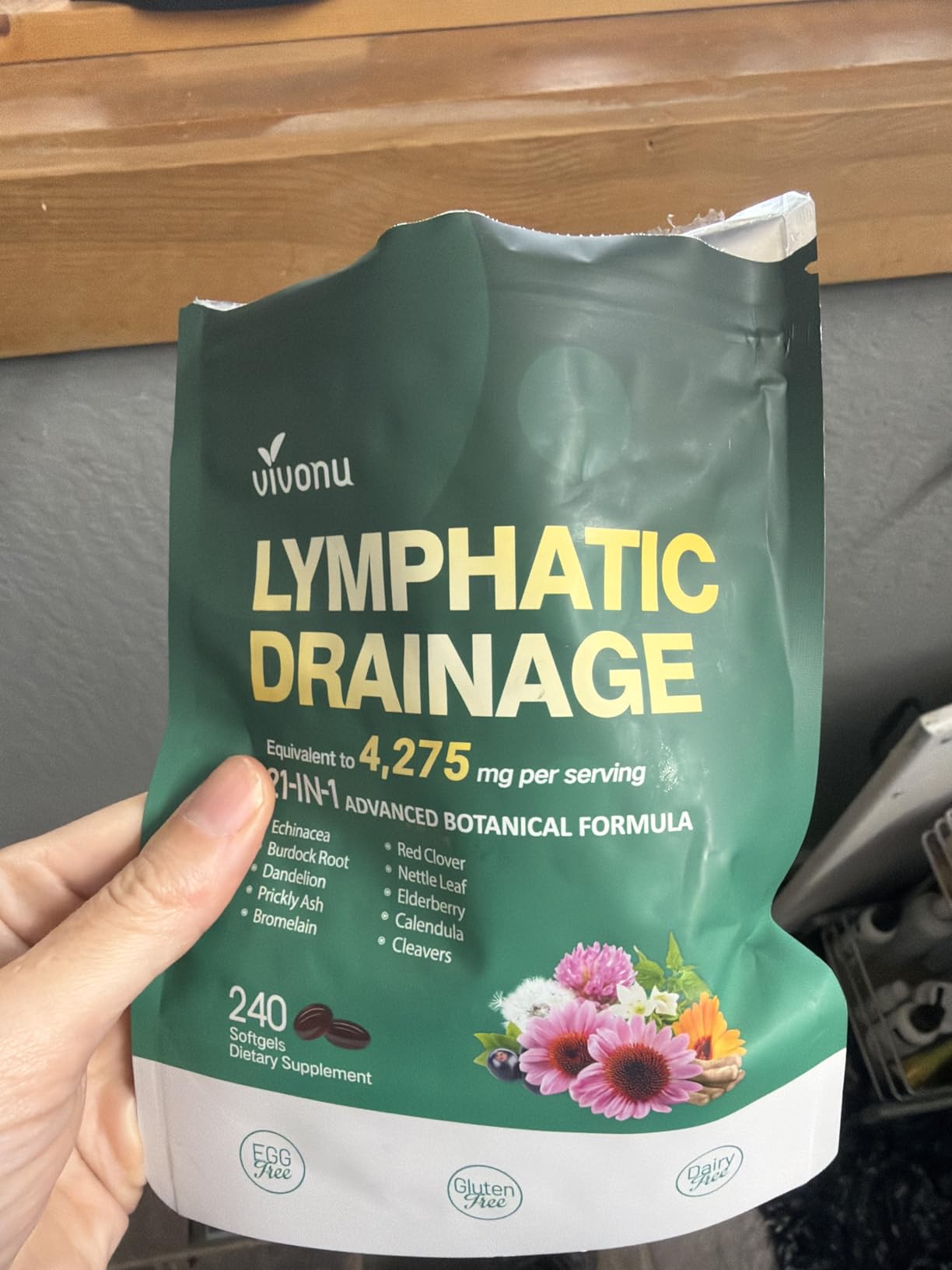
For everyone asking — yes it's real. PSA was 8.4. Retested 9 weeks later. Came back 4.9. My doctor ran it twice because he didn't believe it. I'm not saying anything else except order it
Like · Reply · 12 · 4 h

Emma Emerson
Does this actually address the lymphatic drainage issue the doctor talks about
Like · Reply · 1 · 3 h

Lois Clive
Hey Emma Emerson, I asked the same question. Did my own research on periprostatic lymphatic congestion before ordering. The ingredients check out — Quercetin, Burdock Root, Cleavers. These aren't random. There's legitimate published research behind each one. I'm 11 weeks in. PSA went from 6.9 to 4.1. Draw your own conclusions.
Like · Reply · 1 · 1 h

Alfred Johnson
Wife sent me this link. I said I was fine. She ordered it anyway. She's usually right. Don't tell her I said that. How long does shipping take
Like · Reply · 4 · 2 h

Edith Ashton
It took 6 days for my husband's to arrive (we're in Texas).
Like · Reply · 7 · 1 h

Steven Peyton
I bought this at full price and now I see there's a bundle discount. Slightly annoying but honestly I'd pay double knowing what I know now. PSA dropped from 7.2 to 3.8 in ten weeks. Haven't seen a number under 4 in three years.
Like · Reply · 2 · 26 min

Paul Remington
How long before you start noticing something?
Like · Reply · 3 · 5 h

Franco Dudley
Paul Remington Paul — I'd say weeks 3-4 for sleep and mental clarity. The PSA number took about 10 weeks for me. Give it the full 60 days. The guarantee is real — I tested it with a different order once and refund came through in 48 hours no questions asked.
Like · Reply · 2 · 3 h
Brian Graeme
My son found this for me. I'm 67, not great with the internet, but he set everything up. Just wanted to say — I slept through the night last Tuesday for the first time since February. My wife noticed before I did. That's enough for me.
Like · Reply · 6 · 2 h

Barbara Bradly
Bought this for my dad without telling him. He's 64, stubborn, won't ask for help. But I've watched him disappear into his own head since he got that number back in February. It shows up Thursday. I'll leave it on the counter and not say anything.
Like · Reply · 2 · 1 h

Eric Dean
Does anyone know how long the shipping takes? Want to two for my dad
Like · Reply · 3 · 5 h

Charlie Salter
Hey Eric, mine arrived after about a week
Like · Reply · 2 · 3 h

Emma Shelby
Your dad will be so grateful! It helped mine with his prostate tremendously
Like · Reply · 2 · 3 h

Alex Washington
Tried saw palmetto. Tried pygeum. Tried beta-sitosterol. PSA still climbing. Doctor says wait. Internet says panic. If this actually works I want my $400 back from everything else I bought first.
Like · Reply · 4 · 1 h

Harry Prescott
I don't usually leave comments anywhere. But my PSA went from 7.6 to 3.9 in 9 weeks and I feel like I owe it to every man sitting at his kitchen table at midnight Googling cancer statistics to say: try this before you go down that road any further. I wish I'd found it six months earlier.
Like · Reply · 4 · 1 h

Anna Madison
Ordered 3— for my husband who's been struggling with his prostate health for last 5 years.They have helped dramatically, he seems to be acting like himself and more active
Like · Reply · 4 · 1 h

Jay Milton
Does anyone know if the 60-day guarantee is legit? I've been burned before.
Like · Reply · 3 · 5 h

John Orson
Jay Milton Yes it's real! I actually returned a different product from this company last year (wasn't the lymphflow supp) and got my refund within 2 days. No hassle at all.
Like · Reply · 2 · 3 h
MEDICAL DISCLAIMER: The information provided on this page is for educational purposes and is not intended to replace professional medical advice. Apollis is designed as a alternative to injections and painkillers.
© 2026 All Rights Reserved. Privacy Policy - Terms of Service